IFAW: Whale Program

Whale Spotter Tails for Whales Join the Adventure

JOIN THE ADVENTURE! SHARE THE WONDER!

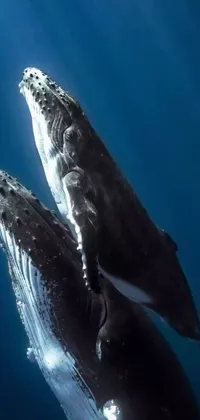
Travel around the world with IFAW as we work to save whales and protect the oceans. Our scientists, educators and conservationists travel to every ocean in the world, defending whales from pollution, habitat destruction, commercial whalers and more.

With your help, we can do even more:
Explore our whale projects around the world.
Learn more about threats and solutions.
Help save whales by supporting IFAW programs.

Whale Detection System

WHALE DETECTION

IFAW and partners developed an acoustic buoy that listens for right whale calls. When the buoys detect a right whale, the recording is beamed via satellite to analysts on shore. Ships then receive an alert to avoid fatal ship strikes.
Click here to see how it works.

Song of the Whale Interactive Tour

SONG OF THE WHALE TOUR

Take an interactive tour of IFAW’s one-of-a-kind whale research vessel, Song of the Whale. Through the interactive tour, you’ll see how researches live, while exploring the oceans to learn more about whales.
Click here to take the interactive tour.

Whales Eat Fish?

WHALES AND FISHERIES

Whales are being killed all over the world in large numbers. Meanwhile, the fisheries have been suffering from a dramatic drop in the number of fish in the oceans. Whaling advocates are saying whales are eating all of the fish.
Click here to watch an enlightening video.


v1.02

Latest IFAW Blogs

Our first dolphin stranding call

As you might know, we are the stranding response team for the Big Bend area of Florida. This means that if a stranding (live or dead) of a marine mammal occurs, or if a marine mammal is found in distress, we are the ones that are called to the scene. One benefit of our research area is that things like that rarely, if ever, happen. Dolphins do die (more…)

History lesson: The discovery of Solvetsky Island’s beluga whales

I’d heard before arriving here quite a bit about Solovetsky Island’s small peninsula where the Beluga observatory tower now stands.  Jake Levenson at IFAW had told me about how this spot is unique as it is the only place in the world where Belugas can be observed so close to the shore.
But there’s no substitute for experiencing something first hand:  My curiosity has been piqued.  And my questions (more…)

Implementing weak links to save humpback whales in Zanzibar

Jamison and I spent today traveling to several fishing villages with Dr. Omar Amir from the Marine Conservation Unit of the Tanzania Department of Fisheries.  Our goal was to meet the fishermen that attended our bycatch workshop and see their gear first hand so we could help them implement weak links.
When weak links, hog rings, and staples are not in place, the results of a whale meeting fishing (more…)

Curious Belugas check out the underwater camera and give a full performance

By the time Don succeeded in getting an image on screen of the Belugas, it was past 3 p.m. Famished, we abandoned him at the tower in search of a hot meal. Don stoically stayed behind to ensure that the camera continued to operate with no kinks.
The rest of us returned to find hot chicken soup waiting for us on the stove. Sasha (the student) (more…)

Our first high-definition glimpse of Russian Belugas

I awoke at 7 a.m. and immediately wondered about the Beluga underwater camera.  Had Don, who is IFAW’s underwater camera expert, and Volodiya, the Beluga whale project’s on-site scientist, succeeded in the middle of the night in getting a high-definition image of the Belugas?
Volodiya, whose tent is nearest to mine, heard me zipping my tent open and came over immediately.
“Can you go wake up Don?  We need to (more…)